Social Media
How to build a social media content plan that brings results
Posting only when inspiration strikes rarely brings customers. Here is how to set goals, choose content pillars and formats, and build a posting rhythm you can actually keep.
Most businesses post on social media the same way: when someone remembers, when there is a new product or when a competitor posts something and it feels like time to react. The result is a profile that goes quiet for weeks, then posts three times in a day, then goes quiet again. Followers do not know what to expect, the algorithm does not know who to show it to, and the effort rarely turns into enquiries.
A content plan changes that. It does not have to be complicated or expensive, but it turns random posting into a system that supports your business goals. In this article we explain, step by step, how to build a social media plan that is realistic to maintain and actually brings results.
Start with the goal, not the post
Before deciding what to post, decide why you are posting. Social media can do many different jobs for a business, and each one needs a slightly different approach:
- Awareness – making sure people in your market know your brand exists.
- Trust – showing your expertise, your team and your work so people feel comfortable contacting you.
- Enquiries and sales – bringing people to your website, your inbox or your shop.
- Community – keeping existing customers engaged so they come back and recommend you.
- Hiring – showing what it is like to work with you.
Pick one or two main goals for the next three months. Then describe your ideal follower in a few sentences: who they are, what problems they have and what they would find genuinely useful or interesting. Every post in your plan should make sense for that person.
Choose the right platforms
You do not need to be everywhere. It is far better to be consistently good on two platforms than occasionally present on five. A quick guide:
- Instagram – visual products and services, local businesses, lifestyle, food, interiors, real estate.
- Facebook – local communities, events, older audiences and, very often, the place where people check reviews and contact details.
- LinkedIn – B2B services, professional expertise, partnerships and hiring.
- TikTok – reaching new, often younger audiences with short, entertaining or educational video.
Start where your customers already spend their time, and add another platform only when the first one runs smoothly.
Define three to five content pillars
Content pillars are the recurring themes your profile is built on. They make planning much easier, because instead of asking "what should we post?" every day, you simply fill each pillar regularly. For a dental clinic, for example, the pillars might be:
- Education – answers to common questions, tips for healthy teeth, explaining treatments.
- Results – before and after cases, shared with the patient's permission.
- Behind the scenes – the team, the equipment, a normal day at the clinic.
- Trust – reviews, testimonials, certificates, years of experience.
- Offers and news – new services, opening hours, seasonal promotions.
A useful rule: most of your posts should give value, educate or entertain, and only a smaller part should directly sell. People follow accounts that are useful to them, not accounts that only advertise.
Mix formats, and reuse every good idea
Each platform rewards different formats, and different people prefer to consume content in different ways. The main formats to plan with are:
- Short videos (Reels, TikTok) – the best format for reaching new people.
- Carousels – several slides that explain something step by step. They are often saved and shared.
- Single images – for announcements, quotes, results and strong photos.
- Stories – everyday, informal content that keeps you visible to existing followers.
The secret of efficient teams is repurposing. One good idea, for example "three mistakes people make when choosing X", can become a carousel, a short video, a few stories and a LinkedIn post. You think once and publish four times.
Decide on a rhythm you can keep
Consistency matters more than volume. Posting three times a week for a whole year will do much more than posting every day for two weeks and then disappearing. Choose a rhythm that fits the time and people you actually have. For many small businesses, a realistic starting point looks like this:
- Monday – an educational carousel
- Wednesday – a short video, behind the scenes or a quick tip
- Friday – a result, a project or a customer review
- Stories – a few times a week, whenever something real is happening
This is just an example. The right rhythm is the one you can maintain without stress.
Build the calendar
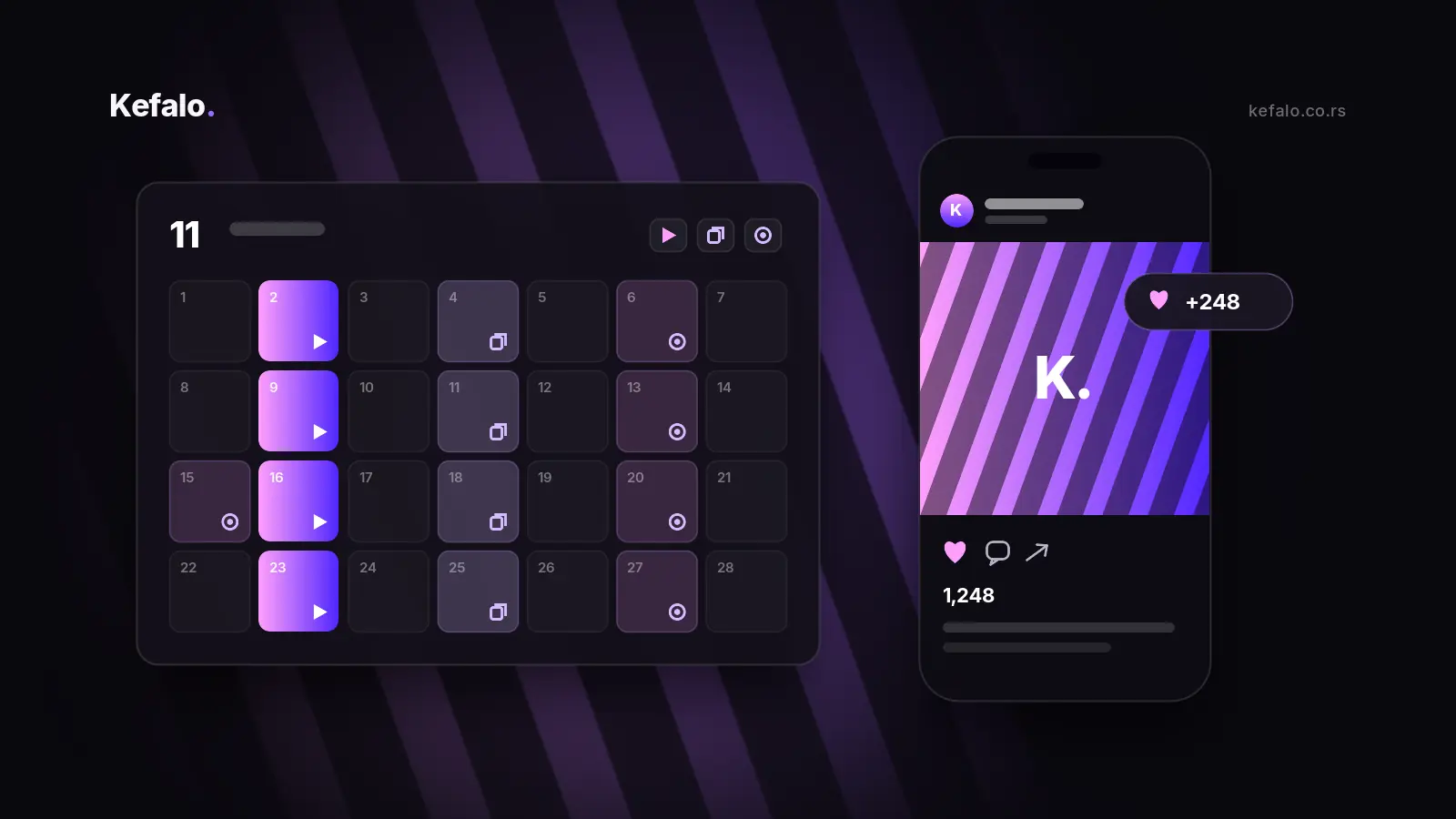
Now put everything together in a monthly calendar. A simple spreadsheet is enough. For each post, note the date, platform, pillar, format, the main message, the call to action and who is responsible. Before filling in regular posts, mark the important dates for the month: holidays, seasonal moments in your industry, product launches, events and promotions.
Then produce content in batches. Recording five short videos in one afternoon is far more efficient than recording one every few days. Once posts are ready, schedule them in advance, for example in Meta Business Suite for Facebook and Instagram, so publishing does not depend on anyone remembering.
Write posts that people actually stop for
- Win the first second. The first line of text or the first moments of a video decide whether someone keeps scrolling. Start with the problem, the result or a surprising statement.
- One post, one message. Trying to say everything at once means nothing is remembered.
- Add subtitles to videos. Many people watch with the sound off.
- Always include a next step. Save the post, send a message, visit the link in bio, book a call.
- Use hashtags and location tags with purpose. A few relevant ones work better than a long list.
Plan time for the community
Social media is not a billboard. Comments and direct messages are often where the real business happens, especially for local services. Plan time every day to reply, thank people for comments and answer questions. Fast, friendly replies turn followers into customers, and they are also a signal to the platform that your content creates conversation.
Measure what matters and adjust every month
Likes feel nice, but they are rarely the most important number. Depending on your goals, pay attention to:
- Reach – how many new people saw your content.
- Saves and shares – a strong signal that the content was genuinely useful.
- Profile visits and link clicks – interest that goes beyond a single post.
- Messages and enquiries – the closest link to real business.
Add tracking parameters to the link in your bio, for example ?utm_source=instagram, so visits from social media appear as a separate source in your website statistics. Once a month, look at which pillars and formats performed best, do more of what works and drop what does not.
Common mistakes to avoid
- Only selling. If every post is an offer, people stop paying attention.
- Posting in bursts. Long silences followed by a flood of posts confuse both followers and algorithms.
- Copying the same post everywhere. A LinkedIn audience expects something different from a TikTok audience. Adapt the format and tone.
- Chasing vanity metrics. A viral post that brings no customers is less valuable than a modest one that brings three enquiries.
- Ignoring comments and messages. An unanswered question is a lost customer.
How we manage social media at Kefalo
We start every collaboration with goals, audience and content pillars, and then build a monthly plan with you, so you always know what is coming and can add your own ideas. We create the content, publish it on schedule, monitor comments and messages and send a clear monthly report with what worked and what we will change. Because we also build websites and run ads, everything is connected, from the first post someone sees to the enquiry form on your site. You can read more about our social media management services.
A good content plan does not mean posting more. It means posting with a purpose.
Conclusion
Successful profiles are rarely the result of inspiration alone. They are built on clear goals, a few strong content pillars, a realistic rhythm and the habit of measuring and improving every month. Once that system is in place, social media stops being a daily headache and becomes a reliable channel for trust and new enquiries.
Want a content plan made for your business? Get in touch and we will suggest pillars, formats and a posting rhythm that fit your goals and your team.