Web Design
How much does a website cost, and why a cheap one ends up costing more
What you actually pay for when you order a website, what drives the price, which hidden costs to watch for, and why the cheapest offer is often the most expensive in the end.
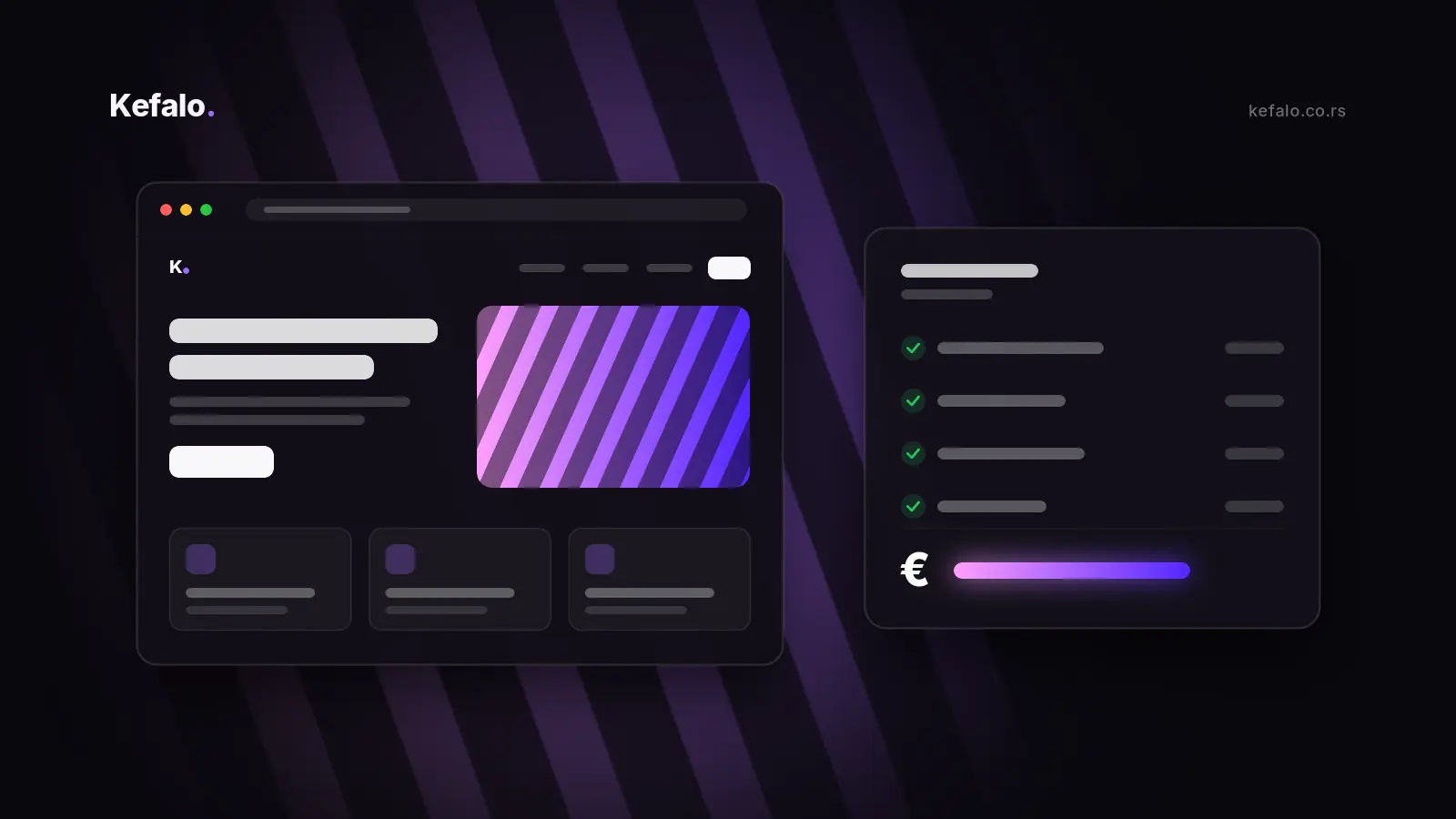
"How much does a website cost?" is a bit like asking "how much does a car cost?". The answer can be a few hundred or several tens of thousands of euros, and both answers can be correct. That is why the quotes you receive vary so much: one agency asks ten times more than another, and a freelancer promises a website over the weekend.
In this article we explain what you are actually paying for when you order a website, what drives the price, which hidden costs to watch for and why the cheapest offer very often turns out to be the most expensive one.
What you are actually paying for
A website is more than design. When you order one, you pay for a series of jobs, and each of them affects the price:
- Strategy and planning – who your customers are, what they should do on the site and which pages are needed to get them there.
- Design – a ready-made template or a design created specifically for your brand.
- Content – copy, photos, video and translations. Who prepares them, you or the agency?
- Development – turning the design into a site that works on every device, quickly and without errors.
- Features – forms, bookings, a blog, an admin panel, multiple languages, online sales, integrations with other systems.
- Technical quality – speed, SEO basics, security and accessibility.
- Maintenance – hosting, updates, backups and support after launch.
What drives the price
These factors have the biggest impact on cost:
- Scope. What counts is not so much the number of pages as the number of different page types. Ten services using the same template cost less than five completely different pages.
- Template or custom design. A template is faster and cheaper, but you look like thousands of other businesses. Custom design costs more, but it sets you apart and follows the way your customers make decisions.
- Features. A presentation site with a contact form is one thing. A site with online sales, bookings, user accounts or an interactive 3D experience is something else entirely.
- Number of languages. Every language means translation, proofreading and correct technical setup for search engines.
- Content. If the agency writes the copy and organises photography, the price goes up, but so does the quality of the site.
- Deadlines. Rush projects mean other work has to move, so they are usually more expensive.
Three typical kinds of website
To compare quotes more easily, it helps to know which category your project falls into:
- A simple presentation site or landing page. A few pages, basic information and a contact form. A good choice for new businesses, single services or campaigns.
- A custom business website. Design tailored to your brand, several page types, a blog, an admin panel for your own edits and often several languages. The right choice for most businesses that want their site to bring enquiries regularly.
- An online shop or platform. Products, payments, delivery, user accounts, integrations with accounting or stock systems, interactive tools. The largest scope of work, but also the most direct link to revenue.
Hidden costs to ask about
The build price is not the only cost. Before you sign, check:
- Domain and hosting – who pays for them and in whose name they are registered.
- Licences – paid themes and plugins are often billed every year.
- Business e-mail – whether it is included.
- Maintenance – who updates the system and plugins, makes backups and reacts if something stops working.
- Changes after launch – whether you can make them yourself or each one is billed.
- Ownership – whether the domain, the site and all content are really yours if you change agency tomorrow.
Why a cheap website is not a good idea
The cheapest offer looks attractive, especially when the site is "just" a digital business card. But a website is not a cost you pay once and forget. It is a tool that either brings you customers or quietly loses them. This is where cheap websites lose most often.
1. They are slow, and slow sites lose visitors
Cheap sites are usually built on multipurpose templates that load code for hundreds of features you do not need on every page, plus dozens of plugins. The result is a site that loads slowly on phones. Visitors leave before they see your offer, and Google ranks slower sites lower. We wrote about this in detail in why website speed decides whether you get the client.
2. You look like everyone else
The same template is used by thousands of businesses, often including your direct competitors. When a website looks generic, the business looks generic too. And customers choose generic businesses by lowest price, not by best service.
3. It looks fine, but it does not bring enquiries
The biggest difference between a cheap and a good website is not visual. A cheap site is built without asking who your customers are, what worries them and what they should do once they arrive. The result is a site that "exists" but does not guide visitors towards a call, a message or a purchase.
4. Search engines struggle to find it
Page titles and descriptions, content structure, correctly configured languages, mobile speed – these are exactly the things cheap sites tend to skip. A site Google does not understand will find it hard to bring you new customers without paid ads.
5. Security and maintenance
A site with outdated plugins and no maintenance is an easy target for attacks. A hacked site, lost content or a site that suddenly stops working while nobody knows how to fix it is, unfortunately, a common story.
6. Ownership traps
A domain registered in the developer's name, no access to the admin panel, a site locked into a platform only one person knows how to use. When that person stops answering, you lose control of your own website.
7. In the end, you pay twice
The most common scenario: after a year or two, the cheap site becomes unusable and has to be rebuilt from scratch. You have paid twice, and in the meantime you have lost the customers a better site could have brought. The real price of a website is not just the amount on the invoice, but also every client it failed to bring.
To be fair, a cheap and simple site sometimes makes sense. If you are testing an idea or only need a basic online presence until the business takes off, a simple solution can be perfectly adequate. What matters is knowing exactly what you are getting, and what you are not.
How to compare quotes
When you receive several offers, ask everyone the same questions:
- What exactly is included, and what is billed separately?
- Is the design made for us, or is it a ready-made template?
- Who writes the copy and provides the photos?
- How many rounds of changes are included?
- How will the site work on phones, and how fast will it be?
- Are SEO basics and multilingual setup included?
- Will we be able to update the content ourselves?
- What does maintenance include, and how much does it cost?
- In whose name are the domain and hosting, and who owns the site?
- What is the deadline, and what happens if it is missed?
A quote that answers these questions clearly and specifically is almost always better than one that is simply the cheapest.
How we prepare quotes at Kefalo
We do not send a price off the top of our heads. We start with a short conversation about your business, your customers and your goals, then propose a scope that makes sense for you, no bigger and no smaller than needed. The offer lists every item, the timeline and what is included after launch, so you know exactly what you are paying for. Because we also handle marketing under the same roof, we build every site from day one to be ready for advertising, social media and search engines.
A good website is not a cost. It is an investment that pays back with every new enquiry.
Conclusion
The price of a website depends on scope, design, features, content and support after launch. The cheapest offer is rarely the best value, because the real cost of a poor website only shows later: in lost customers, a slow site and a rebuild. The best offer is the one that clearly explains what you get and how the site will help you grow.
Planning a new website or a redesign? Get in touch, briefly describe what you need, and we will send you an estimate with a clear overview of what is included.